
For county governments and local public sector agencies, navigating the modern cybersecurity landscape can feel like managing constant change with limited room for error. Counties are expected to protect public infrastructure, sensitive constituent data, court systems, public safety operations, and essential administrative services, all while working within tight budget cycles and lean internal teams. At the same time, ransomware groups continue to target local government because they see operational disruption as leverage.
When county commissioners, chief clerks, or administrative leadership recognize that stronger security oversight is needed, the conversation often turns to hiring a Chief Information Security Officer (CISO). But in today’s talent market, recruiting, vetting, and retaining a seasoned security executive is difficult, especially for agencies competing with private-sector compensation. For many counties, a full-time CISO is not just financially difficult; it is also more leadership capacity than they need on a full-time basis.
This is where the fractional, or virtual, CISO (vCISO) model changes the equation. By partnering with an experienced IT consulting and solutions provider, county governments gain executive-level security leadership, stronger compliance alignment, and practical risk management without taking on the cost structure of a full-time C-suite hire.
The Weight of the Public Sector Security and Compliance Burden
County governments operate under a distinct public sector compliance and governance model, and the pressure is no less serious. Public sector leaders must balance service continuity, transparency, and security while meeting expectations tied to frameworks and requirements such as CJIS for criminal justice information, NIST-aligned security practices, state reporting obligations, cyber insurance controls, and internal governance standards.
A defensible county cybersecurity program goes far beyond firewalls and antivirus software. It requires continuous governance, including:
- A recurring risk assessment cycle covering departments, critical systems, third-party platforms, and public-facing services.
- Strong vendor and third-party risk management, especially where agencies rely on outsourced applications, hosted systems, and regional service providers.
- Documented incident response, business continuity, and disaster recovery plans that support continuity of government and public service delivery.
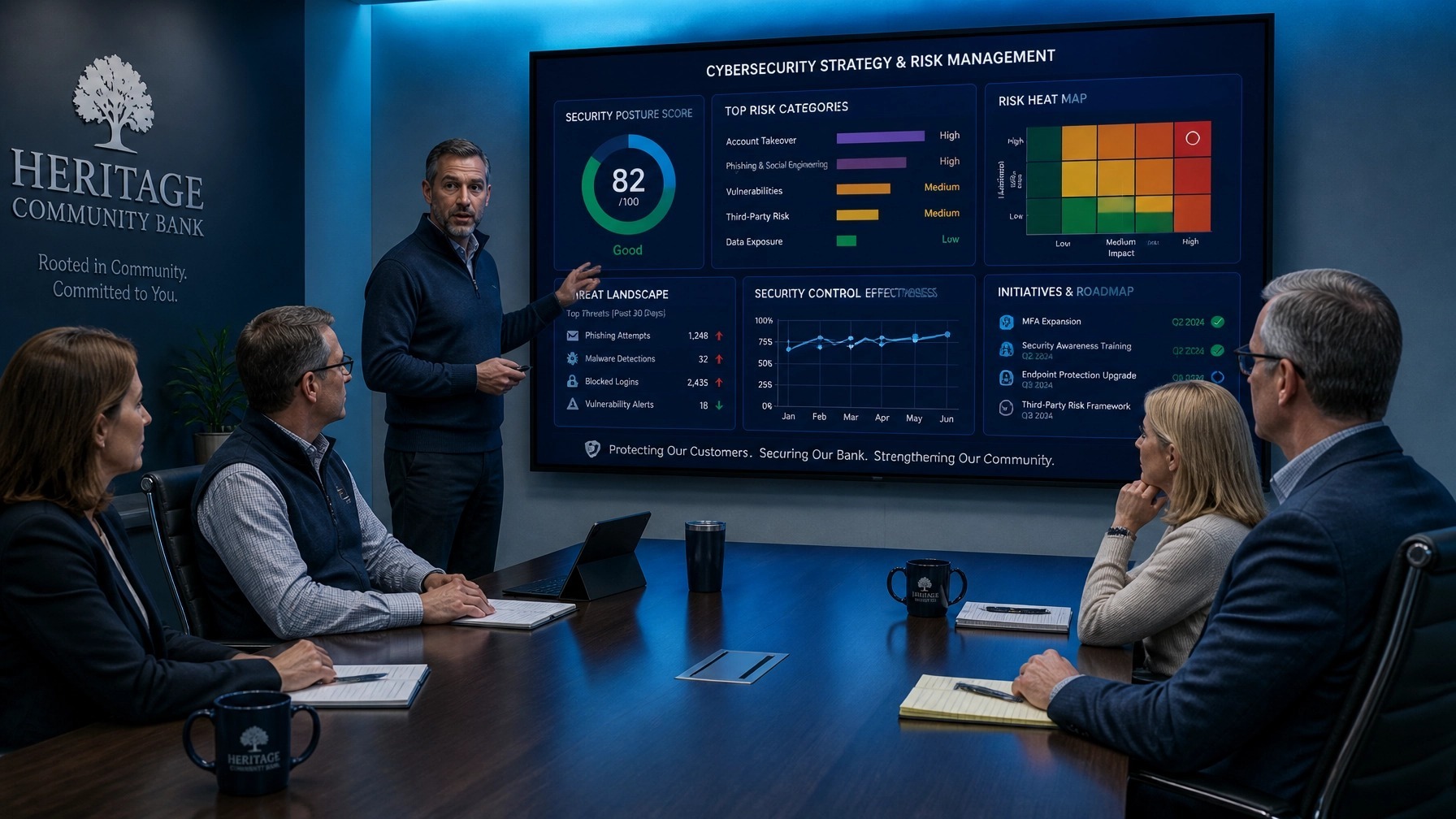
- Regular executive and commissioner-level reporting on security posture, remediation priorities, compliance alignment, and emerging threats.
Failing to meet these expectations can carry real operational consequences. A ransomware event can interrupt courts, public safety workflows, finance systems, elections support functions, or citizen services. In the public sector, cybersecurity is not just a technical concern. It is directly tied to public trust and operational resilience.
Building and defending a resilient security and compliance posture is no longer just an IT task. It requires dedicated executive ownership.
The Full-Time CISO Financial Dilemma
Why don’t more county governments simply hire a full-time CISO? The answer usually comes down to budget reality and talent scarcity.
A qualified public-sector-ready CISO commands a premium, and total compensation can quickly exceed what many counties can reasonably support once salary, benefits, recruiting costs, and retention pressures are considered. For agencies already balancing infrastructure needs, staffing gaps, insurance requirements, and modernization projects, dedicating a large share of the budget to one executive role can create friction with other necessary investments.
At the same time, experienced security leaders are in high demand. Counties are often competing against private industry, larger metro governments, and specialized consulting firms for the same limited talent pool. Recruiting someone who understands governance, risk, compliance, incident response, and the realities of public administration can take months, with no guarantee of a long-term fit.
For many local agencies, spending heavily on a single executive can limit their ability to invest in layered security controls, staff awareness training, endpoint protection, backup resilience, and modernization work that reduces risk across the environment.
How a vCISO Delivers Executive-Level Leadership
A virtual CISO model provides a practical alternative. Instead of paying for a full-time executive to fill a role that may not require 40 hours a week, a vCISO engagement gives your county fractional access to senior security leadership aligned to your actual risk profile, reporting structure, and compliance needs.
At Splashwire, our approach to executive technology leadership and compliance and risk management helps county governments bring structure to security planning, strengthen governance, and make better-informed decisions. We work as a trusted advisor, helping leadership teams move from reactive response to a more deliberate security strategy.
A seasoned vCISO provides critical value across several core areas:
1. Executive Strategy and Governance
County commissioners, chief clerks, administrators, and department heads need security guidance they can actually use. A vCISO translates technical risk into clear executive language, helping leadership understand priorities, budget implications, policy needs, and risk tolerance without burying them in jargon.
2. Compliance Alignment and Audit Readiness
Preparing for CJIS-related expectations, NIST-based assessments, state reviews, cyber insurance questionnaires, or internal audit activity requires structured documentation and defensible processes. A vCISO helps organize cybersecurity operations, identify gaps, prioritize remediation, and support a more consistent compliance posture.
3. Third-Party Risk and Operational Resilience
County governments depend on a wide mix of software vendors, managed platforms, regional partners, and line-of-business systems. A vCISO helps evaluate vendor risk, improve contract and control expectations, and reduce the chance that a third party becomes the weak point in your security program.
Comparing the Options: Full-Time CISO vs. vCISO
To understand why the virtual model is such a strong fit for local government, it helps to compare the two approaches directly:
| Evaluation Criterion | Full-Time CISO | Virtual CISO (vCISO) |
|---|---|---|
| Annual Financial Investment | High fixed salary and benefits commitment | Predictable, fractional engagement model |
| Time to Value | Months of recruitment and onboarding | Faster access to experienced leadership |
| Breadth of Experience | Limited to one individual’s background | Backed by a multidisciplinary consulting team |
| Scalability | Fixed capacity; difficult to flex with changing priorities | Flexible scope based on projects, risk, and budget |
| Public Sector Compliance Focus | Varies by candidate experience | Can be aligned to CJIS, NIST, state, and insurance requirements |
Proactive Security Operations and Continuous Defense
Leadership is only part of the equation. Counties also need practical, ongoing defenses that help detect and contain threats before they disrupt public services.
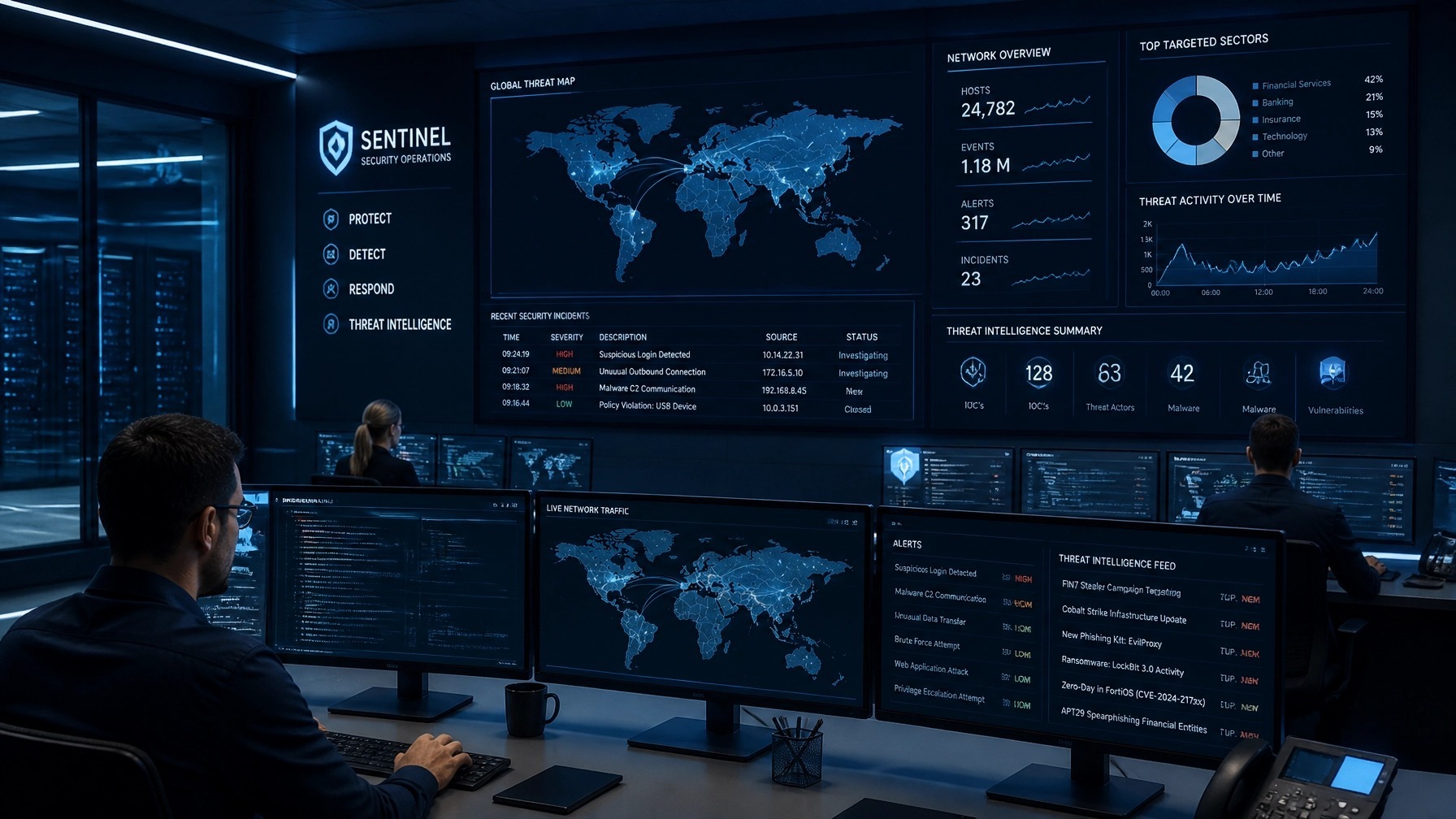
Through our suite of managed IT operations, we help local public sector organizations integrate proactive security monitoring, log management, and incident response into a more cohesive operating model. When vCISO leadership is paired with managed detection and response, backup strategy, and policy-driven security operations, counties can build a stronger defense-in-depth posture across public safety, court systems, administrative services, and other essential government functions.
Technology should support public service, not create constant operational anxiety. When security and IT are structured clearly, your team can stay focused on serving residents, supporting departments, and maintaining continuity across critical operations.
Partnering with Splashwire
Meeting public sector security expectations does not have to overwhelm your internal team or force a full-time executive hire before you’re ready. Whether you need strategic guidance, a comprehensive risk assessment, stronger governance, or ongoing security leadership, we can help your county build a practical path forward that supports public administration, operational resilience, and constituent service continuity.
Explore our full range of services to see how we help organizations strengthen security, simplify compliance, and improve how technology is experienced.
Ready to bring executive-level security leadership to your county without the overhead of a full-time C-suite role? Connect with our team to schedule a confidential consultation.