My days are pretty wall-to-wall. If you’ve ever looked at a CEO calendar, you know it isn’t just the “big meetings” that eat the clock. It’s the constant stream of internal huddles, project reviews, vendor conversations, budget discussions, security planning, content approvals, and operational check-ins. The work itself matters. The aftermath? That’s where the hours used to disappear.
Notes had to be cleaned up. Summaries had to be sent. Follow-up emails had to be drafted. Action items had to be assigned. And of course, there was always the pile of “Can you send that over?” and “What did we decide on that?” messages waiting before the coffee even had a chance to cool. CEO work is important. Playing part-time administrative air traffic controller? Less exciting.
For over 25 years, Splashwire has focused on helping clients solve complex IT problems. And I’ve always believed the best technology does more than look impressive in a demo; it gives people time back. That’s exactly why I’ve been pushing hard on AI internally.
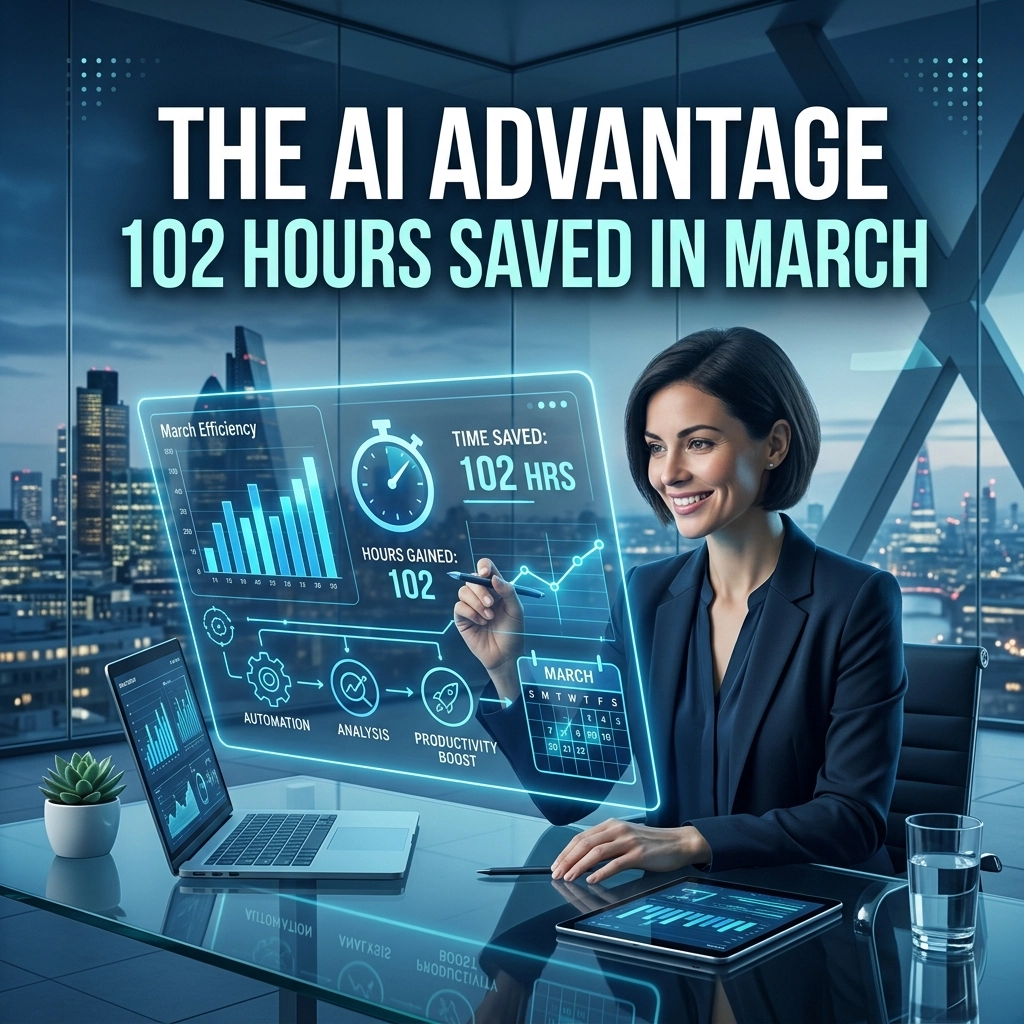
In the month of March, I tracked the impact closely. The result? I saved 102 hours.
That’s not a typo. That’s more than two full work weeks of administrative churn that simply… disappeared. And no, I didn’t unlock that by sleeping less or typing faster like some kind of over-caffeinated robot. I did it by building and refining repeatable AI “bots” that help automate internal work, stay consistent, and move faster without sacrificing quality.
That’s the real AI Advantage at Splashwire. I’m not standing on the sidelines talking about what AI might do someday. I’m using it in-house, every week, to see where it shines, where it breaks, and where the guardrails need to be. In other words, I test the fences first so our clients don’t have to.
Bots That Turn Meetings Into Output
So what does this actually look like inside Splashwire?
It looks like fewer blank pages. Fewer “I know we talked about this, but where are the notes?” moments. Fewer delays between a good meeting and actual movement.
I use AI bots internally to turn conversations into usable output fast. These aren’t just glorified transcripts. They help me capture context, organize decisions, surface action items, and draft the next step—whether that’s an internal recap, a client-ready outline, a project update, or a polished follow-up email.
That means I’m not constantly restarting from scratch, and neither is my team. I’m starting with a strong draft, reviewing it, tightening it up, and moving on. Human judgment still runs the show. The bots just handle a lot of the administrative heavy lifting that used to clog up the day.
And here’s the part that matters beyond my own calendar: when I’m not buried in admin, the whole machine runs smoother. The team gets faster answers. Priorities get clarified sooner. Clients get quicker follow-up. If the boss isn’t bogged down in the weeds, everybody downstream feels the difference.

Why We Push AI In-House First
Here’s my philosophy: if I’m going to advise clients on AI, automation, security, and process design, I should be willing to live with these tools myself first.
How do I know what works? I test it.
How do I know where the risks are? I test that too.
At Splashwire, I’ve been exploring the edges of these AI workflows internally so I can give clients grounded, real-world guidance instead of recycled internet hype. I’m intentionally pushing the limits in-house, learning where automation saves time, where oversight matters, and where the shiny object turns into a bad idea.
That doesn’t mean I’m publishing the secret sauce for competitors. Nice try. But it does mean our consulting comes from hands-on experience. I test the fences first so our clients don’t have to, and that makes us better partners when it’s time to talk strategy, security, governance, and practical implementation.
Scaling the “Voice” of Leadership
Consistency matters. Whether I’m communicating internally, updating clients, refining documentation, or building marketing content, the tone needs to be right and the message needs to stay aligned.
One of the most useful side effects of these AI workflows is how they help maintain that consistency across the business. The same internal inputs that generate a technical summary can also help draft client communications, content outlines, and operational updates that follow an agreed-upon format and voice.
That reduces the “telephone game” effect. The strategy discussed in a meeting doesn’t get watered down three handoffs later. It gets translated into clear, usable communication much faster.
It’s really about scaling leadership without losing clarity. I still can’t clone myself, which is probably for the best, but having AI assistants that help me organize, respond, and communicate consistently gets us a whole lot closer.
“What’s Next?” Without the Chase
One of the biggest time-savers—and honestly, one of the biggest sanity-savers—is using bots to help keep priorities, decisions, and open items organized.
In the old model, figuring out what was overdue or what was blocking a project usually meant chasing people down, digging through email threads, or bouncing between tools. Now, I can use AI to help surface the current status faster, reduce internal interruptions, and keep momentum from stalling out over avoidable admin work.
I’m not using AI to replace people. I’m using it to reduce the repetitive drag that pulls smart people away from meaningful work. That matters.
Because every hour I don’t spend buried in internal churn is an hour I can spend on something more valuable: client strategy, executive guidance, security planning, technology roadmaps, and the initiatives that actually move the needle.
And that creates a trickle-down effect fast. When I’m less tied up in admin, I’m more available to unblock the team, make decisions, and stay focused on the bigger picture. That means fewer bottlenecks internally and a better experience externally.
That’s the part people miss when they talk about AI as a gimmick. Executive efficiency isn’t just a personal win. It directly benefits our clients. When I’m more productive behind the scenes, the team has more clarity, more momentum, and more capacity for high-level thinking, faster response, and better partnership out front.

Why This Matters for Clients
This is bigger than saving time for the sake of saving time.
When I sharpen my own internal operations with AI, our clients benefit in very real ways:
- Faster Follow-Up: Less lag between meetings, decisions, and next steps.
- More Strategic Capacity: More of my time goes toward planning, consulting, and solving bigger business problems.
- Better Guidance: My recommendations come from real internal use, not theory.
- Focused Human Oversight: AI handles the repetitive churn while our people stay focused on judgment, leadership, and client outcomes.
At Splashwire, we’ve always believed in solving the “2:00 AM Problem.” Usually, that refers to technical support, but there’s another version of that problem too: the late-night realization that an important summary, update, or decision is still sitting in someone’s mental inbox. Smart AI workflows help fix that.
The Real Result: 102 Hours
This isn’t a “someday” projection. By the end of March, I looked at the numbers and realized I had reclaimed 102 hours through internal AI-driven efficiency.
Think about that for a second. That’s 102 hours no longer swallowed by repetitive admin work, task chasing, draft building, recap writing, and all the little operational speed bumps that quietly steal a week before anyone notices.
And here’s the important part: those hours don’t just vanish into thin air. They get reinvested.
They become more time for strategy. More time for alignment. More time for client initiatives. More time for the high-level work our clients actually want and need from me and my team.
And when that reclaimed time happens at the CEO level, it doesn’t stay at the CEO level. It trickles down. Faster decisions. Better communication. Less waiting. Fewer internal traffic jams. If the boss isn’t bogged down in admin, the whole machine runs smoother for everyone else.
When I look at the evolution of IT over the last 25 years, I see how we’ve moved from simply “keeping the lights on” to helping drive businesses forward. AI is part of that next leap, but only when it’s applied thoughtfully, tested responsibly, and tied to real business outcomes.
If you’re curious about how AI can improve internal operations without creating unnecessary risk—or if you want a partner who’s actually using this stuff instead of just talking about it—we should talk. At Splashwire, we’re committed to simplifying how technology is consumed and enhancing how it’s experienced. That includes AI.
The future is “human-led and AI-augmented.” And after seeing what 102 hours can do in a single month, I can tell you: the advantage is very real.
Josh Hinkle
CEO, Splashwire